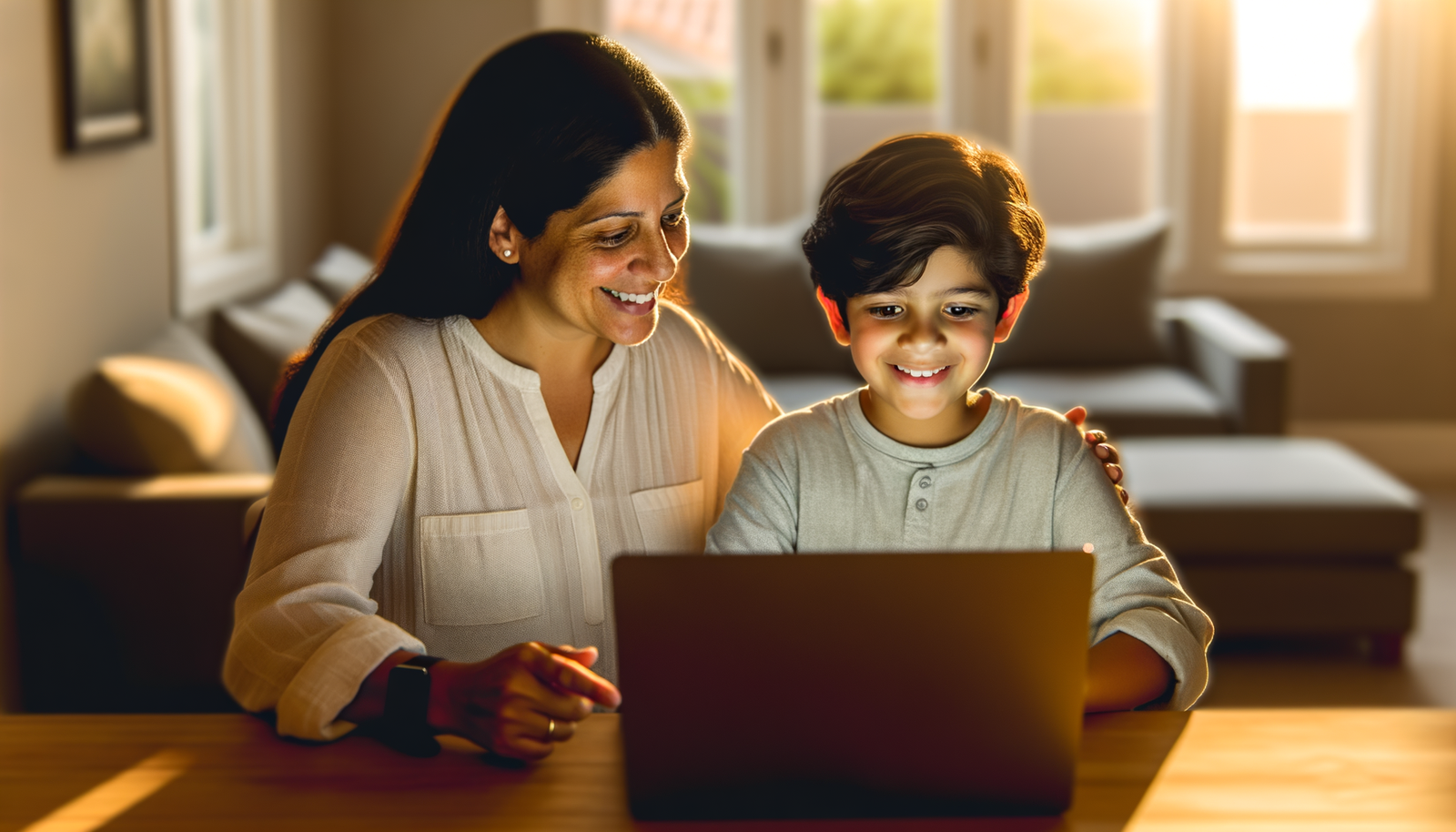
Is ChatGPT Safe for Kids? A Parent’s Honest Review
Three months ago, my 10-year-old asked if she could use ChatGPT for homework. My first instinct was no — I’d heard the horror stories about kids using AI to cheat, about chatbots saying inappropriate things, about children forming emotional attachments to AI companions.
But then I paused. I work in tech. I run AI projects. If I can’t figure out how to navigate this safely with my own kid, what hope does anyone else have?
So I said yes. With rules. Lots of rules.
Here’s what I learned.
What My Kid Actually Uses ChatGPT For
Spoiler: It’s not what I expected.
She uses it like a patient teacher who never gets tired of explaining.
When she’s stuck on a math problem, she asks ChatGPT to walk her through it step-by-step — not to solve it, but to explain how to solve it. She’ll say, “I don’t understand how to multiply fractions. Can you show me with an example?”
And ChatGPT… does exactly that. Calmly. Without making her feel dumb.
She uses it for brainstorming.
When she had to write a short story for English class, she asked ChatGPT for plot ideas. Not to write the story — to bounce ideas around like she would with a friend. “What if the main character is a scientist who accidentally invents time travel but only goes backward?”
The story she ended up writing was nothing like what ChatGPT suggested. But the conversation helped her get unstuck.
She uses it to check her own work.
This was the surprise. She’ll write an essay, then ask ChatGPT, “Can you tell me if this makes sense?” Sometimes it spots confusing sentences or missing transitions. She takes that feedback and fixes it herself.
It’s like having an editor on demand. And honestly? Her writing has improved.
The Weird Stuff (And How We Handled It)
Hallucinations:
ChatGPT confidently told her that dolphins are fish. (They’re mammals.) It said Shakespeare wrote The Odyssey. (That was Homer. Different guy. Different millennium.)
Our rule: If you’re using ChatGPT for facts, you check a second source. Always.
Now she does this automatically. “Wait, that doesn’t sound right. Let me Google it.”
That’s… actually a useful skill? Healthy skepticism of confident-sounding sources? I’ll take it.
The “helpful but vague” problem:
Sometimes ChatGPT gives answers that sound helpful but don’t actually explain anything. Like when she asked how photosynthesis works and it gave her a paragraph of technical jargon she didn’t understand.
Our rule: If you don’t understand the answer, ask it to explain like you’re 10. (Or 5. Or “using only Lego analogies.”)
She’s gotten really good at this. “Can you explain that in simpler words?” is now her default follow-up.
The emotional attachment thing:
I was worried she’d start treating ChatGPT like a friend. Confiding in it. Preferring it to humans.
That… didn’t happen.
She treats it like a tool. A very useful tool, but a tool. When she’s upset, she talks to me or her friends. When she’s stuck on homework, she asks ChatGPT. There’s a clear line in her head.
Maybe it’s because we talked about it from day one: “This is a computer program. It’s not your friend. It doesn’t know you. It can’t feel things.” She absorbed that. It stuck.
The Rules We Set (And Why They Matter)
Rule 1: I get to check the chat history.
She knows I can (and do) read her ChatGPT conversations. Not because I don’t trust her — because I want to catch problems early.
So far? The weirdest thing I’ve found is a 20-minute conversation about whether penguins could survive in space. (Verdict: no, but they’d look cool in spacesuits.)
Rule 2: No personal information.
She can’t tell ChatGPT her name, where she lives, what school she goes to. Nothing identifying.
This one’s non-negotiable. She gets it.
Rule 3: If ChatGPT says something that makes you uncomfortable, tell me immediately.
We practiced this. “What if it says something mean?” “What if it says something about bodies or sex?” “What if it says something that makes you feel bad about yourself?”
I don’t want her feeling like she has to protect me from “bad” conversations. I want her to come to me.
So far, she has. Once, ChatGPT gave her a weirdly intense answer about climate change that freaked her out. She showed me. We talked about it. Crisis averted.
Rule 4: School work has to be YOUR work.
ChatGPT can help her understand. It can’t do the work for her.
The test: If I ask you to explain what you turned in, can you? If the answer is no, you didn’t learn it — you copied it. And that’s cheating.
She gets this. She’s actually more careful about citing sources now because she’s hyper-aware that people might think she cheated.
The Verdict: Is ChatGPT Safe for Kids?
Short answer: It depends on the kid. And the rules.
ChatGPT itself isn’t inherently dangerous. It’s not going to corrupt your child. But it’s also not a babysitter. It’s a tool — a powerful, imperfect tool that requires supervision.
Here’s what I think every parent should know:
The Good:
- It’s patient. It never gets frustrated. It never says, “I already explained this.” For kids who are anxious about asking “dumb questions,” that’s huge.
- It helps with learning, not just answers. When used right, it actually builds skills — research, critical thinking, self-editing.
- It normalizes asking for help. My kid is less afraid to admit when she doesn’t understand something now. That’s worth a lot.
The Bad:
- It hallucinates. Confidently. Kids believe confident answers. You have to teach them not to.
- It can be vague or wrong. Sometimes the “help” isn’t helpful. Kids need to know when to walk away and ask a human instead.
- It requires active parenting. You can’t just say yes and walk away. You have to set rules, check in, course-correct.
The Bottom Line:
If you’re willing to:
- Set clear rules
- Check in regularly
- Teach critical thinking alongside AI use
- Be the kind of parent your kid will come to when something feels off
…then yeah. ChatGPT can be safe. Even useful.
But if you’re hoping to hand your kid an AI assistant and never think about it again? No. That’s not how this works.
Practical Tips for Parents
Start with supervised use.
Sit with your kid the first few times. Watch how they use it. Talk through what’s helpful and what’s not.
Make it a conversation, not a lecture.
Ask: “What did you learn today?” “Did ChatGPT help or confuse you?” “Did anything feel weird?”
Kids will tell you things if you ask in a curious, non-judgmental way.
Set up OpenAI’s Family Controls (if available).
As of early 2026, OpenAI doesn’t have robust parental controls. But they’re working on it. Check their website for updates. Use what’s there.
Teach the “two-source rule.”
If ChatGPT says it, verify it somewhere else. Always.
This is media literacy 101. We’re just applying it to AI.
Model healthy AI use.
Your kid is watching how you use AI. If you treat it like magic, they will too. If you question it, fact-check it, use it as one tool among many? They’ll learn that.
The Free ChatGPT Safety Checklist
Want a printable checklist for safe AI use with kids? I made one.
It covers:
- Questions to ask before letting your kid use ChatGPT
- Rules to set (customizable by age)
- Red flags to watch for
- Conversation starters for ongoing check-ins
Final Thoughts
Three months in, I’m glad I said yes.
Not because ChatGPT is perfect. It’s not.
But because saying yes — with rules, with check-ins, with open conversations — taught my kid something more valuable than any AI could:
How to use powerful tools responsibly. How to question confident-sounding sources. How to ask for help when she needs it.
Those are the skills she’ll need in an AI-saturated world.
And honestly? Those are the skills we all need.
What’s your take? Have you let your kids use ChatGPT? What rules do you set? I’d love to hear what’s working (or not working) for your family.
[Drop a comment or email me at hello@ourkidsandai.com]
Related Posts:
- 5 AI Tools That Help with Homework (Without Doing It For Them)
- How to Explain ChatGPT to a 6-Year-Old (And Why You Should)
- Character.AI and Kids: What Parents Need to Know
About the Author:
I’m RH — a Silicon Valley mom of two, licensed attorney, and someone who’s spent way too much time thinking about AI and parenting. I write this site because I needed these answers for myself, and I figured other parents might too.
No fear-mongering. No techno-utopianism. Just honest parent-to-parent talk about raising kids in the age of AI.
Leave a Reply